E-Invoicing in Europe: What Does the Berlin Summit Mean for Small Businesses?
The Outvoicer team attended the E-Invoicing Exchange Summit in Berlin, where industry experts discussed the rollout and future of e-invoicing in Europe. Here's what matters most — what's happening across Europe and what it means for small businesses that already have plenty on their plate.
Brigita Andersone ·
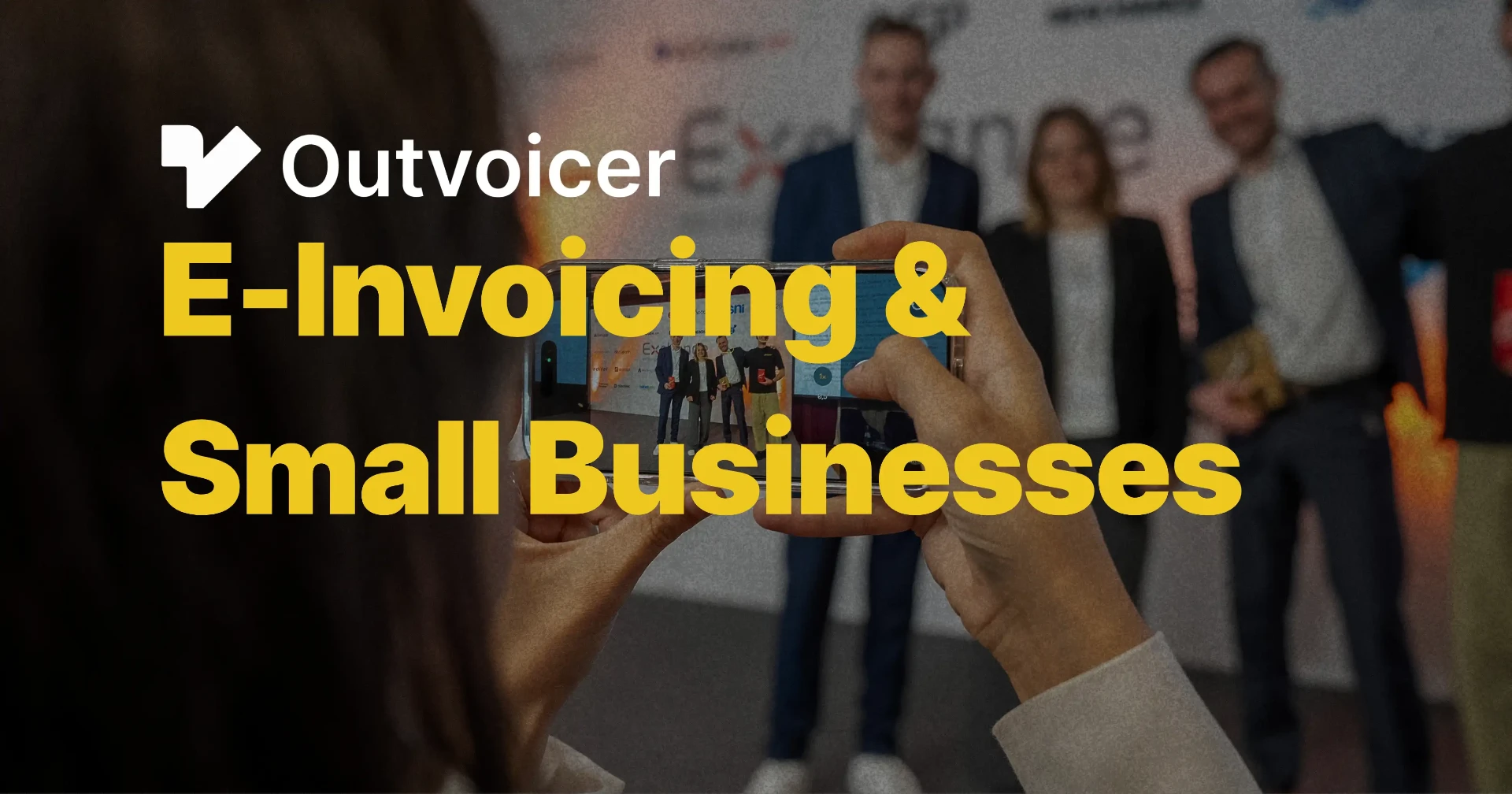
This article is based on data presented during the day 1 sessions of the E-Invoicing Exchange Summit in Berlin, 2026.
E-invoicing is becoming the new normal across Europe — and small businesses stand to gain the most from the change.
Key takeaways
- 🇫🇷 France launched e-invoicing in September 2026. In the first weeks, 12 million e-invoices worth €37 billion were sent.
- 🇭🇺 Hungary has had real-time invoice reporting since 2021, and e-invoicing becomes mandatory in 2030.
- 🇬🇧 The UK plans to introduce mandatory e-invoicing from April 2029, with more detailed plans expected on 28 October.
- Europe is moving towards one shared cross-border e-invoicing format, targeted for July 2030.
- Roughly a quarter of invoices are rejected on first submission because of errors. Structured e-invoices help reduce this.
🇫🇷 France is already showing results
One of the most striking examples at the summit was France. In the first weeks of the rollout, five million businesses had already chosen a provider and 140,000 businesses were issuing e-invoices — even though for most of them it was not yet mandatory.
One of the main reasons is very practical: faster payments. Late payments are already starting to fall.
The system itself is designed to be easy to understand. Tax authorities receive structured data, while business owners keep working with a familiar invoice format without diving into technical details.
🇫🇷 France now has 150 approved e-invoicing providers, giving businesses the freedom to choose the right solution and be sure it meets the requirements.
E-invoice data reporting is getting faster
Across Europe, the time businesses have to report transaction data keeps shrinking. New EU rules require reporting within 10 days: the seller must submit data immediately, while the buyer has five days to confirm it.
Some countries already work this way; for others the change is still ahead. The direction is clear — faster, near real-time information flow.
Europe is moving towards one e-invoicing format
Cross-border trade is another key issue. Europe aims to introduce one shared e-invoicing format based on the UBL or CII standards.
Countries can still add their own specific requirements and data fields, but the overall system is becoming more unified.
What does this mean for business owners? You don't need to master technical standards or track every country's rules. That's the job of the e-invoicing provider you choose.
One question to ask your e-invoicing provider
Not every European country publishes a list of approved providers. So when choosing an e-invoicing solution, check two things: in which countries the provider is approved, and whether it handles the required data reporting for you.
This conversation will help you see whether the solution is reliable and still a good fit if your business starts working with foreign clients.
Why small businesses benefit most from e-invoicing
🇬🇧 In the UK alone, the e-invoicing mandate will affect around 5.6 million small businesses. But the summit also highlighted a real problem: many business owners — and even bank staff — are not yet well informed about the upcoming changes. And e-invoicing is not the only reform businesses need to prepare for.
Still, the benefits are concrete and felt every day:
- faster payments and better cash flow;
- easier access to financing;
- fewer invoice errors;
- less manual and admin work;
- more time to grow the business.
That last one matters especially for small businesses — the less time spent on paperwork, the more time for the business itself.
🇱🇻 What does this mean in Latvia?
The next step is cross-border trade. If your business works with foreign companies, structured e-invoices will matter more and more in those transactions too. That's exactly why Europe is working so hard on a shared format.
Another term worth knowing is Peppol (EN 16931 standard, PEPPOL format). It's an international network for exchanging structured e-documents between businesses and public bodies across countries, and its importance grows as cross-border e-invoicing develops.
What format is an e-invoice?
An e-invoice file is XML (Extensible Markup Language). In Latvia, the XML structure is set by the national standard and must comply with the PEPPOL BIS Billing 3.0 specification. Read more in our e-invoicing in Latvia guide.
Again, business owners don't need to get into the technical details — what matters is choosing a provider that ensures the required compatibility.
3 things to do right now
- Check your e-invoicing tool. Ask your accountant or accounting software whether your tool can send e-invoices and will be ready for upcoming EU requirements.
- Clean up your invoice data. The more accurate the information, the lower the risk of errors and the smoother your invoicing.
- Don't wait until the last minute. Preparing early helps you avoid unnecessary stress when the new requirements become mandatory.
One last step is left — picking a platform that handles the rest for you.
Ready for simpler invoicing with Outvoicer?
Outvoicer creates and sends your e-invoices quickly and without extra admin, and reports the data to VID automatically — all you need to do is start.